Learn how to spot fake sports cards like a pro. Discover key signs of counterfeit cards, from printing quality to serial numbers and authentication tips.
Ever question whether or not a sports card you’ve purchased is genuine or a quality reproduction? When it comes to sports card collecting, many people lose out annually because counterfeit cards are becoming harder to tell apart from the real ones.
Fake cards can be very similar to real cards, particularly if you are not familiar with them or view them online. Being able to spot fake sports cards is vital in 2026 to safeguard your investment and prevent expensive mistakes.
However, using the proper approach, you can learn the truth about a sports card and purchase with confidence.
How to Spot Fake Sports Cards Like a Pro
1. Check Card Printing Quality
2. Inspect Card Thickness and Feel
3. Look for Proper Logos and Branding
4. Check Card Edges and Corners
5. Verify Serial Numbers and Codes
6. Compare with Trusted Sources
7. Buy from Trusted Sellers Only
1. Check Card Printing Quality
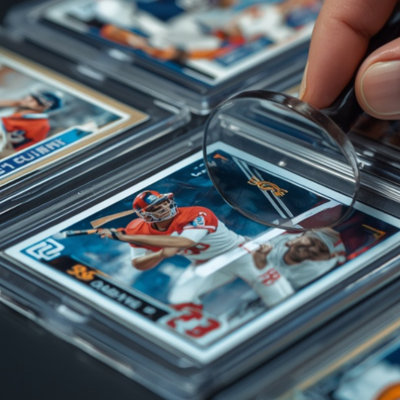
Authentic sports cards will be clearly printed with sharp images, perfect colors, and very fine details. When examined closely, fake cards appear slightly blurry or faded.
There’s more to it than just edges and alignment of the text. The first indication of a counterfeit card is poor print quality.
However, it is always important to verify the card with an authentic and verified version before buying.
2. Inspect Card Thickness and Feel
The thickness and texture of real sports cards vary from brand to brand and from series to series. Moreover, fake cards are usually lighter or have a different texture than genuine cards.
The collector commonly observes differences in surface stiffness and smoothness. These are some of the minor factors used to determine the authenticity of cards.
However, careful handling can uncover some key clues to authenticity.
3. Look for Proper Logos and Branding
Official sports cards always feature the correct logos from brands like Panini and Topps. Falsified cards can have logos that are misspelt or slightly different.
Any design flaws indicate a fake credit card. Please check the branding information before purchase.
However, one essential element of authenticity checks is brand consistency.
4. Check Card Edges and Corners
Edges and corners of real sports cards are clean and precisely cut. Unauthorized cards may be cut crookedly or have rough edges.
However, corners are carefully checked for any bending or manufacturing imperfections. This information is hard to impersonate precisely.
It is important to have good lighting to better see edge imperfections.
5. Verify Serial Numbers and Codes
Numerous sports cards nowadays have serial numbers or authentication codes. These are used to check the originality.
Fake cards can have missing, duplicated, or incorrect numbers. Wherever possible, cross-check with official databases.
This is quite significant for limo cards.
6. Compare with Trusted Sources
The best way to identify fake cards is to compare them with trusted sources. However, authenticity is confirmed by the official websites and graded card listings.
Collectors frequently reference auctions and databases for the grading companies. This helps to minimize the possibility of purchasing a counterfeit product.
Don’t assume the seller has provided all the photos in the listing.
7. Buy from Trusted Sellers Only
The best way to prevent the purchase of fake sports cards is to buy from a reputable seller. This is why trusted platforms and certified dealers are important to mitigate risk.
Don’t take on an unknown seller that’s selling at an abnormally low price. However, they are frequently offered things that seem too good to be true.
The reviews and sellers’ history should never be overlooked before buying.
Conclusion:
The clear signs of a fake sports card involve paying attention to details and knowing some basic techniques for assessing the card’s quality, the brand, and the authentication process.
However, as counterfeit card sophistication grows, collectors need to be diligent and on their toes.
Printing quality, edge, serial number, and trusted sources can help safeguard your investment.
These skills enable you to be a more confident collector and make the best of (and perhaps the least of!) the sports card market.